
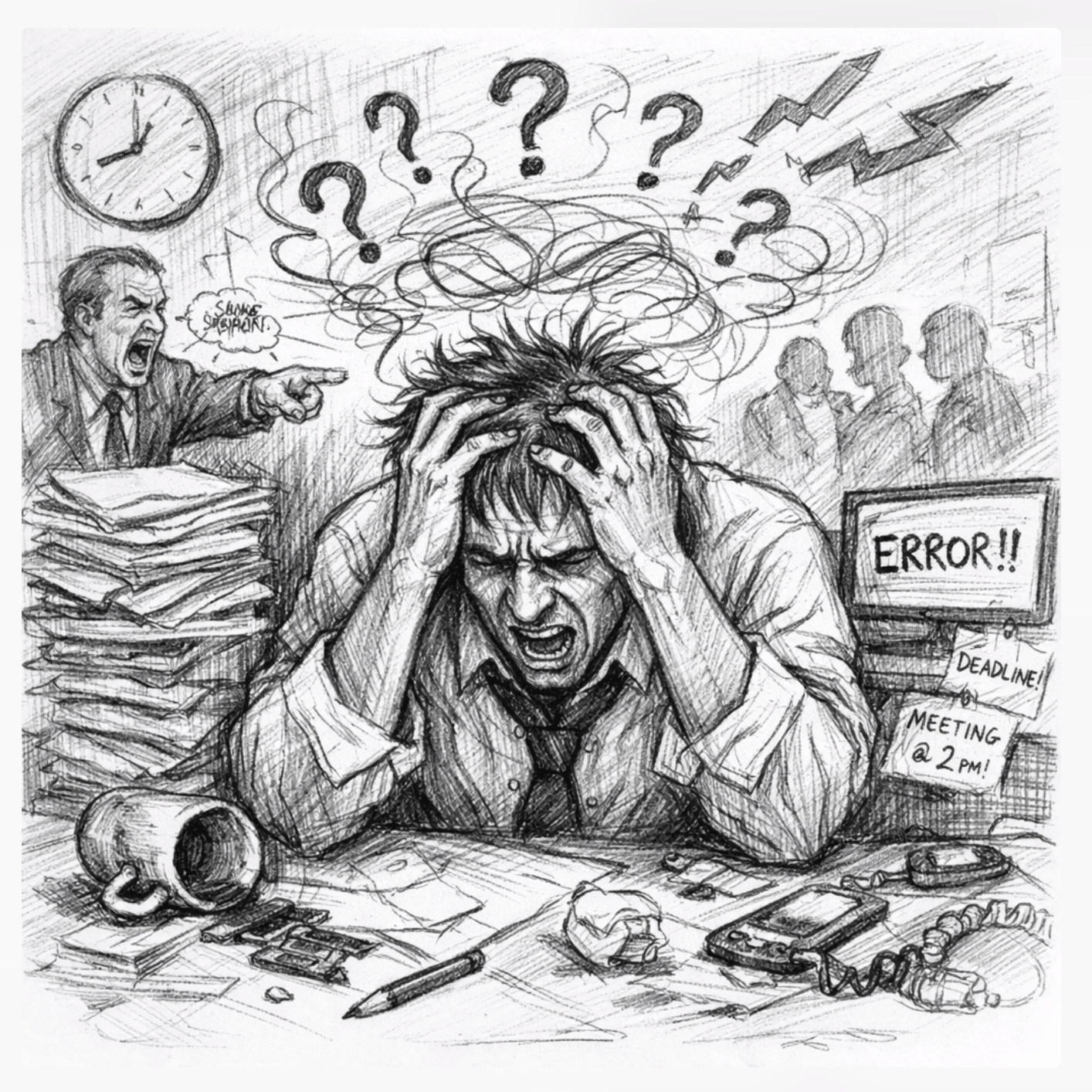
EOS® and Tormented Souls at Work
The Hidden Cost of Confusion and Dysfunction
Most leaders don’t wake up asking,
“How do I create more fear, confusion, and dysfunction today?”
And yet many organizations unintentionally do exactly that—even while running on EOS®.
When people don’t know if they belong, what they believe in, what they’re accountable for, how they’re measured, whether they’re heard, how they’ll grow, or what “balance” even means in their role, something predictable happens:
Their souls become tormented at work.
Not in a dramatic sense—but in a quiet, corrosive one.
-
Mental noise replaces focus
-
Fear replaces initiative
-
Self-protection replaces teamwork
-
Compliance replaces commitment
-
Discretionary energy disappears
A tormented soul cannot do great work.
A tormented soul cannot fully trust.
A tormented soul cannot give you their best.
And no amount of hustle, pep talks, or accountability pressure fixes that.
When EOS Makes Things Worse (Before It Gets Better)
Here’s a truth many leaders miss:
When EOS is implemented mechanically—as something done to people—rather than humanly, as something done for them, it can actually increase confusion and fear.
Employees experience it as:
-
“Another system being done to me”
-
“More leadership rah-rah, less listening”
-
“More structure without more clarity”
-
“More scorecards without more meaning”
-
“More meetings without more voice”
The tools are right.
The intent may be pure.
But for the frontline employee, the experience can still feel confusing—and confusion is fuel for fear.
That’s why many CEOs say:
“We’ve implemented EOS… but it still feels like my people are holding back.”
They are.
Not because they don’t care.
But because they don’t understand the individual human why behind EOS.
The Core Issue EOS Was Built to Solve—But Doesn’t Measure
EOS was never meant to only create traction.
It was designed to create Healthy Traction—Vision, Traction, and Healthy.
We say things like:
-
“What gets measured gets done”
-
“Inspect what you expect”
-
“Measurement gives you a pulse on the business”
And yet most organizations never measure the very things that create—or relieve—torment at work.
We call these the 7 Critical Needs:
-
Do people feel like they belong?
-
Do they believe in the mission and strategy?
-
Do they clearly understand their roles?
-
Do they trust how they’re measured?
-
Do they feel heard?
-
Do they feel developed?
-
Do they experience healthy balance?
Because these aren’t measured, leaders guess.
Or worse—they assume.
And the torment stays hidden.
The Shift: From “EOS Done To Me” → “EOS Done For Me”
This is where the 7 Critical Needs change everything.
They don’t add new tools.
They reframe the EOS tools you already have around the human experience.
When these needs are met:
-
Belief replaces anxiety
-
Role clarity replaces conflict
-
Measurement replaces guessing
-
Feedback replaces assumption
-
Focus replaces noise
-
Belonging replaces isolation
The same EOS tools suddenly feel different—because they are different.
They stop feeling mechanical and controlling.
They start creating clarity, trust, and commitment.
And clarity, trust, and commitment are the antidote to torment.
A Final Thought for Leaders
When you respond meaningfully to feedback on the 7 Critical Needs, you show your people something powerful:
EOS is not being done to them.
It’s being done for them.
And that’s when discretionary energy shows up.
Walt BrownAuthor, Attract or Repel
3rd EOS Implementer | 200+ EOS Implementations | 2,000+ Leadership Team Days